

Familiar Ties

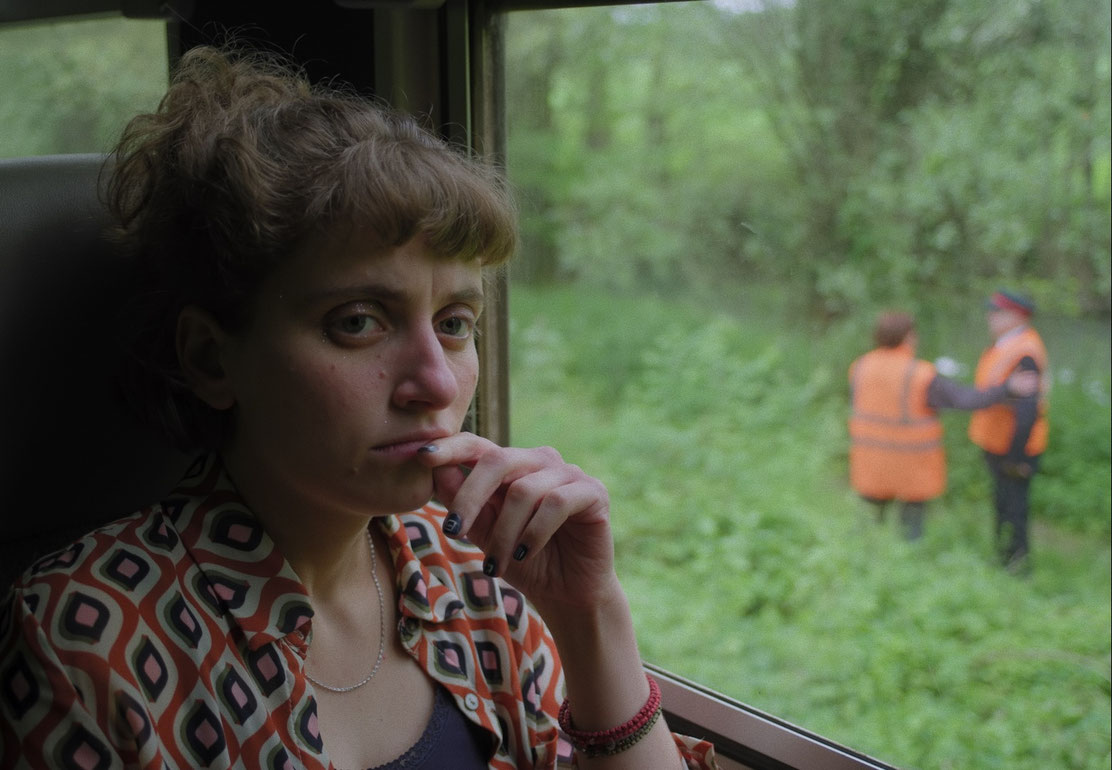
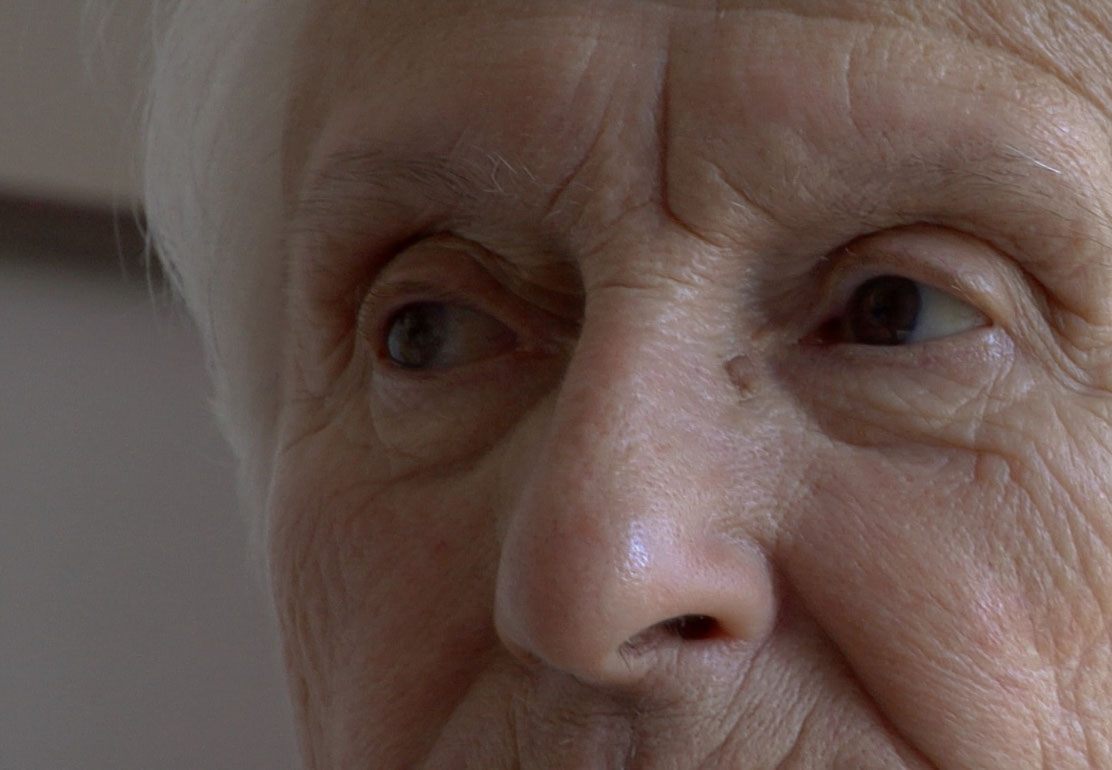
In places that are points of contact between past and present, intimate conversations unfold between a grandmother and her granddaughter: by the sea, at an amusement park, and among carefully sorted memorabilia. In intimacy, two women – one of them filmmaker Cordula Rieger herself – explore a blank space and hesitantly draw outlines out of the haze. Their hesitation isn’t a fear of contact, but rather a respectful giving of their time to one another.
When a box labeled “Edith” is finally opened, a narrative of a train accident that occurred in 1985 on the line from Le Havre to Paris is pieced together from camera shots and (half-)sentences. “An experience that helps us understand something in life,” explains the grandmother. Her granddaughter responds: “So, do you think I can understand it?”
The intimately documented moments between Cordula and her grandmother are interspersed with a staged train journey that takes place in the present. Here, Cordula herself is traveling on a crowded train to Paris when it suddenly makes an emergency stop. As the train abruptly brakes, reality reverberates in the fiction. It finds an echo chamber in the sudden standstill, where the issue of reality vs. fiction can expand further while also reaching its limits: How can we understand each other in and through shared moments?
By empathizing with these possibilities of documentation and fiction, as well as their fault lines and connections, Liens familiers succeeds in utilizing absence to enable tender conversation and personal encounters. The story rejects abbreviated accounts of strokes of fate and, instead of dramatic revelations, opts for a cautious exploration of caesuras; it achieves an awareness that two people need not share the same level of concern in order to achieve mutual understanding. (Lisa Heuschober)
Translation: John Wojtowicz
Directors’ statement for Familiar Ties
When my grandmother said that losing her daughter gave her a different understanding of other people's grief, I asked her: "Do you think I can understand yours?" She didn't answer and smiled at me instead.
In my experience, family history shapes how we understand loss. Sooner or later, everyone is confronted with death: personally, through family stories, or more abstractly through the daily news. When a train stops because someone has taken their own life, reactions differ: some passengers simply pass the time waiting, while for others, the sudden halt may awaken painful memories.
The first screenplay of Familiar Ties was already intertwining fictional scenes and the draft of documentary ones. After filming the conversations with my grandmother, together with Magdalena Steiner, we selected fragments from nine hours of material and wove them into the screenplay, readapting the fictional parts. The train scenes were shot half a year later, creating a dialogue between lived memory and the difficulty of talking about grief.
In a time when every day we are confronted with the deaths of people we don't know Familiar Ties comes as an echo of empathy. It reflects upon the impossibility of fully grasping the depths of another person's grief and the necessity of trying nonetheless.
Cordula Rieger
Liens familiers
2025
Austria, France
25 min